Frequently Asked Questions
Many businesses receive repeated enquiries about their products, services, operating hours, locations and procedures. An AI chatbot can be configured to answer common questions using approved business information.
Intelligent Customer Communication Designed Around Your Business
Customers increasingly expect businesses to provide convenient access to information, respond to enquiries promptly and offer assistance when they need it.
For businesses managing multiple customer enquiries, maintaining consistent communication can become a significant operational challenge.
Traditional contact forms and frequently asked question pages remain useful, but they do not always provide the interactive experience customers prefer.
However, AI-generated responses are not automatically accurate. Their reliability depends on the information available to the system, its operating instructions and the safeguards implemented.
An effective customer service chatbot should provide useful assistance while recognising when a question requires human attention.
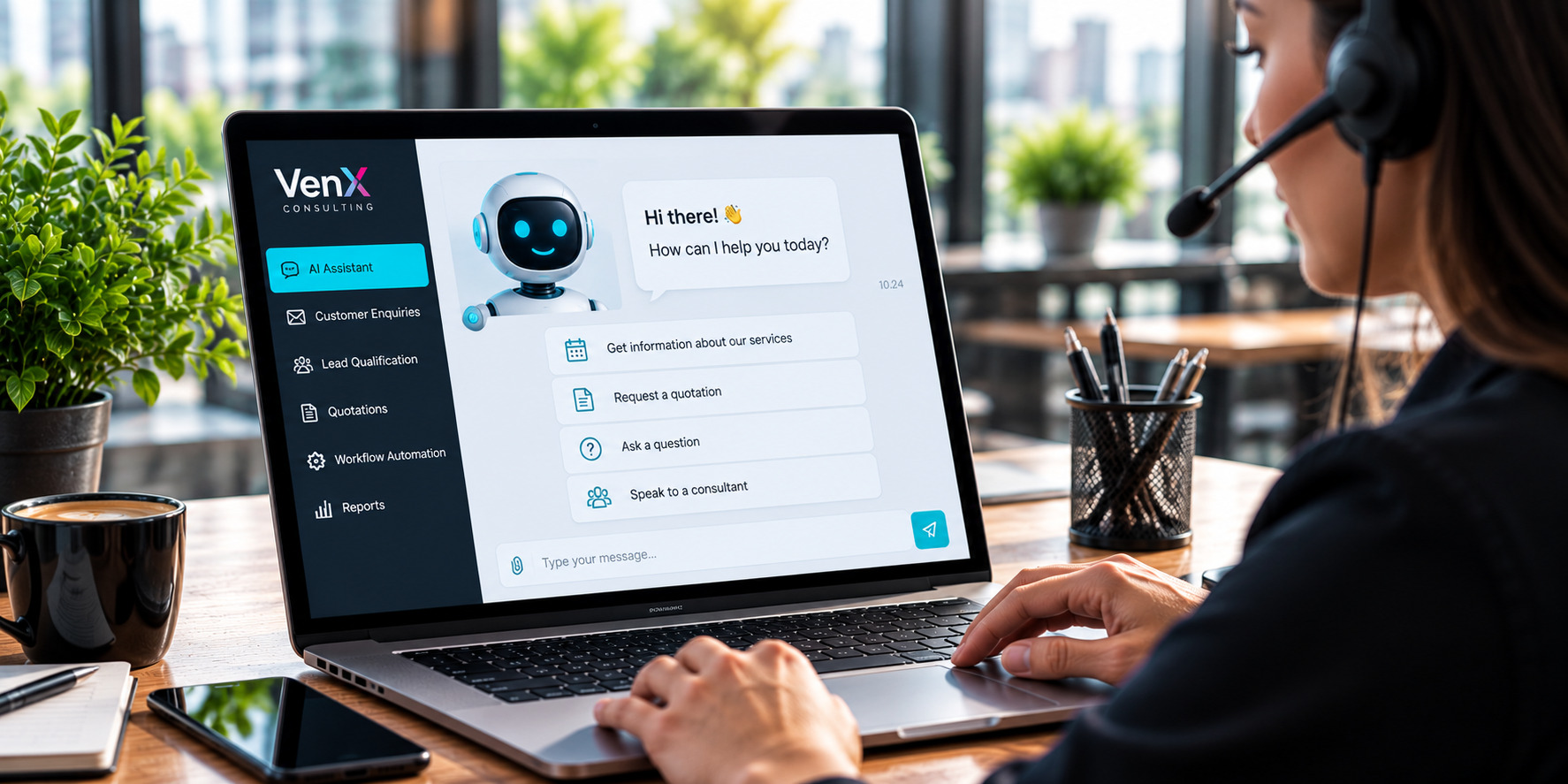
Useful conversations begin with clear, approved information and a defined customer-service purpose.
Many businesses receive repeated enquiries about their products, services, operating hours, locations and procedures. An AI chatbot can be configured to answer common questions using approved business information.
Customers often visit websites during evenings, weekends and public holidays. When staff are unavailable, an AI chatbot can provide an initial point of contact.
Businesses offering multiple products or services can sometimes overwhelm website visitors with information. An AI chatbot can help customers identify the service most relevant to their requirements.
Some customers prefer asking questions through a conversation rather than completing a lengthy contact form. A chatbot can guide visitors through an enquiry process by requesting information relevant to their needs.
Not every customer enquiry should be handled automatically. Complex complaints, sensitive situations, unusual requests and matters requiring professional judgement may need human intervention.
Guide visitors towards existing reservation, booking or contact channels, and clarify what information is required before a request can be assessed.
Chatbot functionality should reflect the information customers actually need and the way each business operates.
Hospitality businesses frequently receive questions about menus, operating hours, reservations, functions, catering arrangements and service availability. Explaining available catering services.
Consulting businesses often receive enquiries from prospective clients who are uncertain which service they require. A chatbot could explain available consulting services, ask initial questions and guide visitors towards an appropriate consultation.
Online retailers may receive frequent enquiries about products, delivery arrangements, payment options and ordering procedures. Product categories.
Accommodation providers often receive enquiries about facilities, check-in arrangements, locations and booking procedures. A chatbot could explain property features, provide approved visitor information and direct customers towards booking channels.
A structured process helps keep the chatbot useful, manageable and aligned with your business requirements.
We begin by reviewing how the business currently communicates with customers. This includes identifying common enquiries, existing support channels and potential communication challenges.
We establish what the chatbot should achieve. Objectives may include answering routine questions, guiding website visitors or collecting structured customer enquiries.
Relevant business information is gathered and reviewed. This may include service descriptions, frequently asked questions, business procedures and customer support information.
The chatbot is developed or configured according to the agreed requirements. Website integration, branding and any additional functionality are addressed within the approved scope.
After deployment, ongoing monitoring may help identify information gaps, recurring customer questions and opportunities for improvement. Maintenance arrangements should be agreed according to the system's complexity and operational requirements.
Chatbots should use approved business information and avoid making unsupported claims. Where reliable information is unavailable, the chatbot should acknowledge its limitations and direct the customer towards human assistance. Customers should understand when they are interacting with an automated system. Businesses should retain appropriate control over chatbot information, functionality and customer escalation procedures.
Personal information should only be collected where necessary and handled according to applicable privacy requirements. For South African businesses, this includes relevant obligations under the Protection of Personal Information Act (POPIA). International projects may require consideration of additional privacy regulations. Integration with websites or other systems depends on the existing platform, technical requirements and the scope of the proposed solution.
In many cases, yes.
Integration options depend on the website platform, hosting environment and technical requirements.
A review of the existing website can help determine the most suitable approach.
Yes, provided the system is hosted and configured for ongoing availability.
Actual availability depends on the hosting environment and supporting services.
Yes, where this functionality is included.
Appropriate privacy notices, consent processes and secure information handling must be implemented.
Potentially.
Some implementations may provide live handover, while others may record a request for staff follow-up.
The available options depend on the selected technology and project scope.
Yes.
Business information, chatbot instructions and system performance should be reviewed regularly.
Hosting, software dependencies and AI service costs may also require ongoing management.
Every customer enquiry represents an opportunity to provide useful information, build confidence and establish a business relationship.
An appropriately designed AI customer service chatbot can help make that process more accessible, structured and responsive.
Whether your business receives frequent service enquiries, needs assistance with customer information or wants to explore conversational AI on its website, VenX Consulting can help assess the possibilities.
We focus on identifying practical applications and developing solutions aligned with your business requirements.